
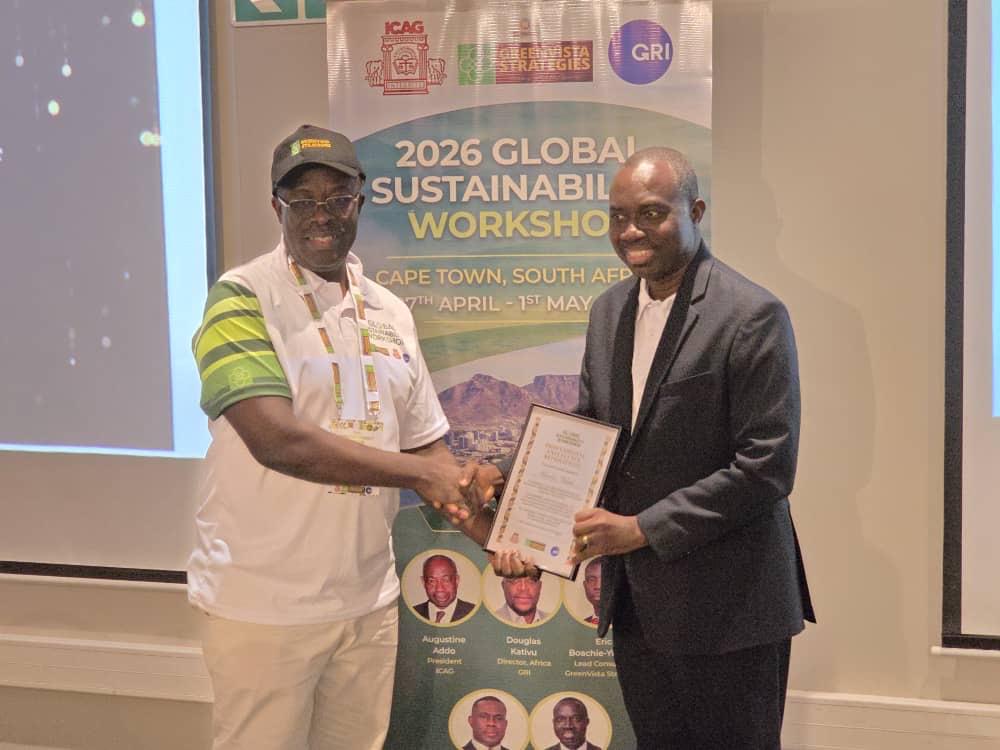
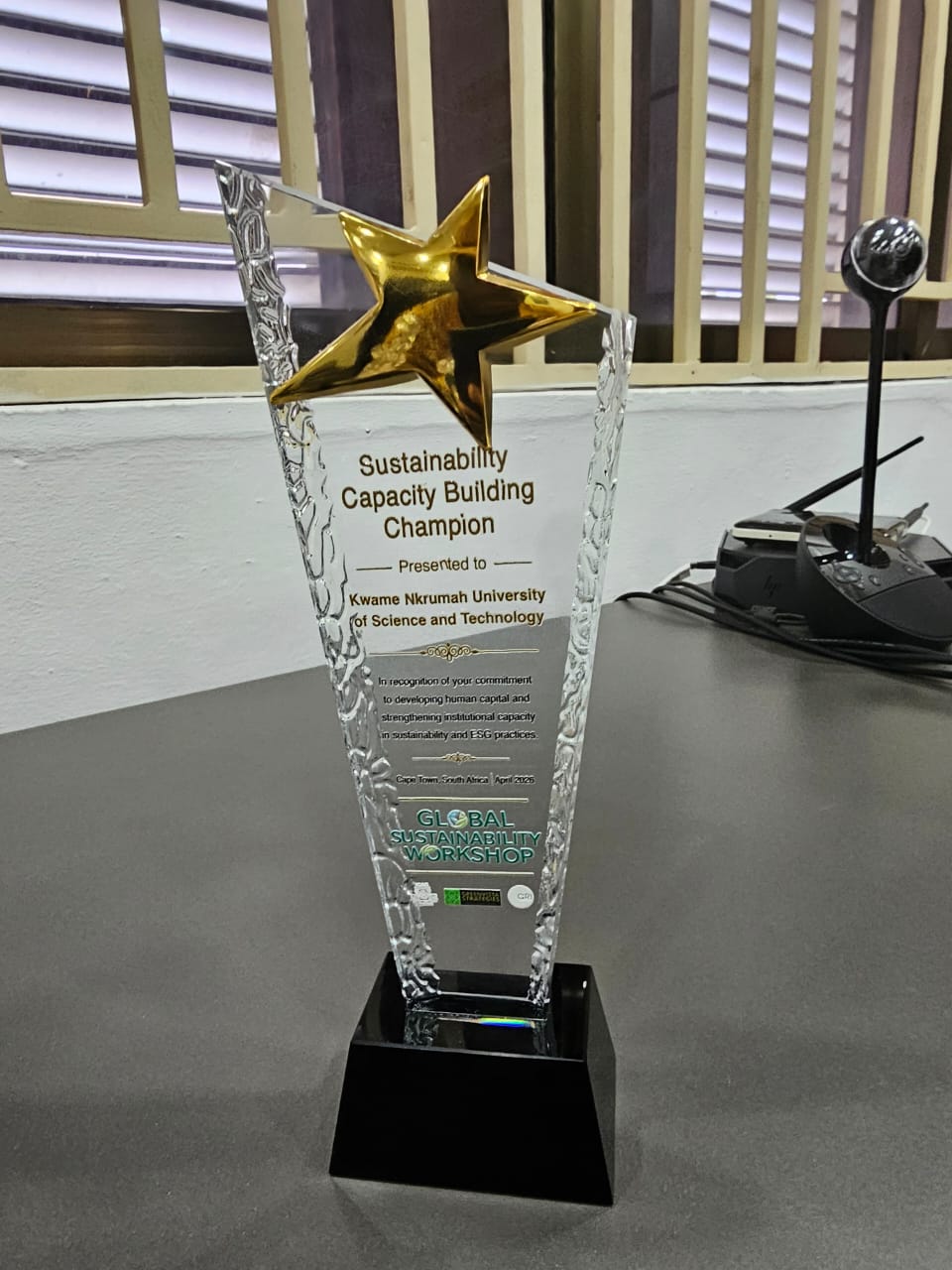
The Kwame Nkrumah University of Science and Technology, Kumasi (KNUST) has been recognised as a Sustainability Capacity Building Champion at the 2026 Global Sustainability Workshop (GSW 2026) held in Cape Town, South Africa.
The award, presented during the workshop’s Awards and Recognition Ceremony, acknowledges KNUST’s commitment to developing human capital and strengthening institutional capacity in sustainability and Environmental, Social and Governance (ESG) practices.
The high-level international workshop, held from April 27 to May 1, 2026, brought together 134 participants from academia, public institutions, financial services, regulatory bodies and the private sector to build capacity in sustainability reporting, governance and strategic integration.
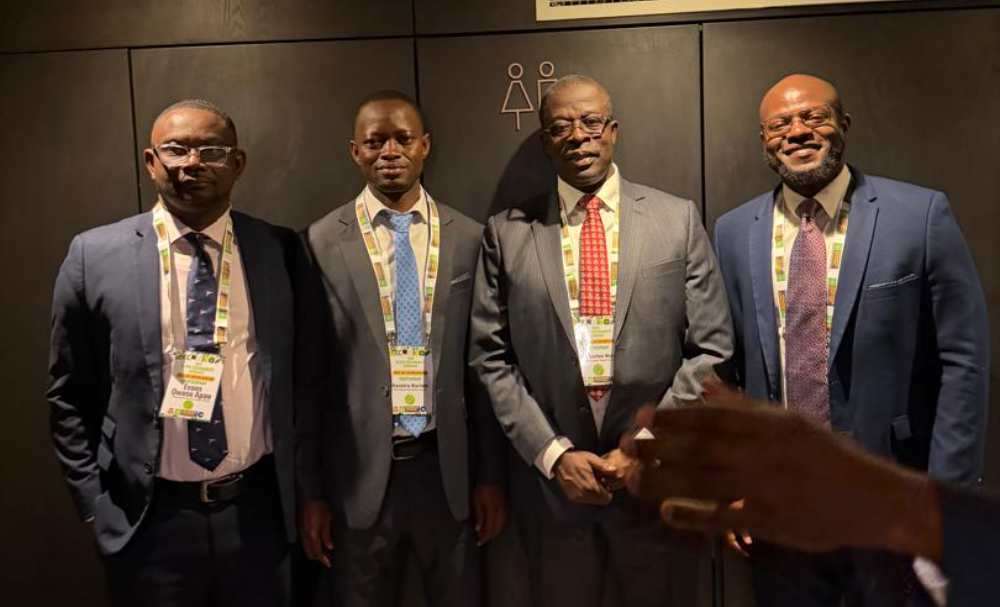
KNUST’s delegation, led by Finance Officer Dr Charles Nsiah, included Mr. Evans Owusu Apau, Mr. Nashiru Karimu and Mr.Kwaku Tweneboah, who contributed to technical sessions, case-based group work and cross-sector discussions.
The programme focused on equipping professionals with practical knowledge in global sustainability frameworks, including the Global Reporting Initiative (GRI) Standards and IFRS S1 and S2 disclosure requirements.
The theme, “ESG Fundamentals to Boardroom Action: The Modern Professional’s Role,” emphasised the shift from awareness to implementation, positioning sustainability as central to strategy, risk management and long-term value creation.
KNUST was recognised alongside key national institutions, including the Ghana Education Trust Fund (GETFund), Ghana Revenue Authority (GRA), Minerals Income Investment Fund (MIIF), National Service Authority (NaSIA) and Ghana Water Limited, highlighting its role in advancing sustainability capacity within Ghana’s higher education and research landscape.
The award citation noted that institutions honoured under the category demonstrated strong commitment to sustainability leadership, professional development and institutional transformation through capacity-building initiatives.
The workshop also featured technical sessions, case-based group learning, and cross-sector dialogue, enabling participants to apply ESG principles to real-world challenges in governance, finance and operations.


